

🔧 The Exhaust Crossover Question
You're building your exhaust system. You've got headers, you've got mufflers, you've got tips. But there's one decision that changes everything: X-pipe or H-pipe?
It's not just about looks. It's about sound, performance, and character. Get it right, and your car sounds like a symphony. Get it wrong, and you're stuck with a sound you hate.
For V8 owners especially, this choice defines your car's personality. X-pipe gives you that high-pitched, exotic scream. H-pipe gives you that deep, classic muscle rumble.
But which one is actually better? And what's the real difference?
Let's break down the science, the sound, and the soul of exhaust crossovers.
🎵 What Are Crossover Pipes?
The Basic Concept
Crossover pipes connect the left and right exhaust banks before the mufflers. Instead of two separate exhaust streams, you create a single, unified system.
Why? Because connecting the banks:
- Balances exhaust pressure between cylinders
- Improves scavenging (exhaust flow efficiency)
- Changes sound characteristics dramatically
- Can increase horsepower through better flow
Most V8s, V6s, and even some 4-cylinders benefit from crossovers. But the type of crossover matters.
The Two Options
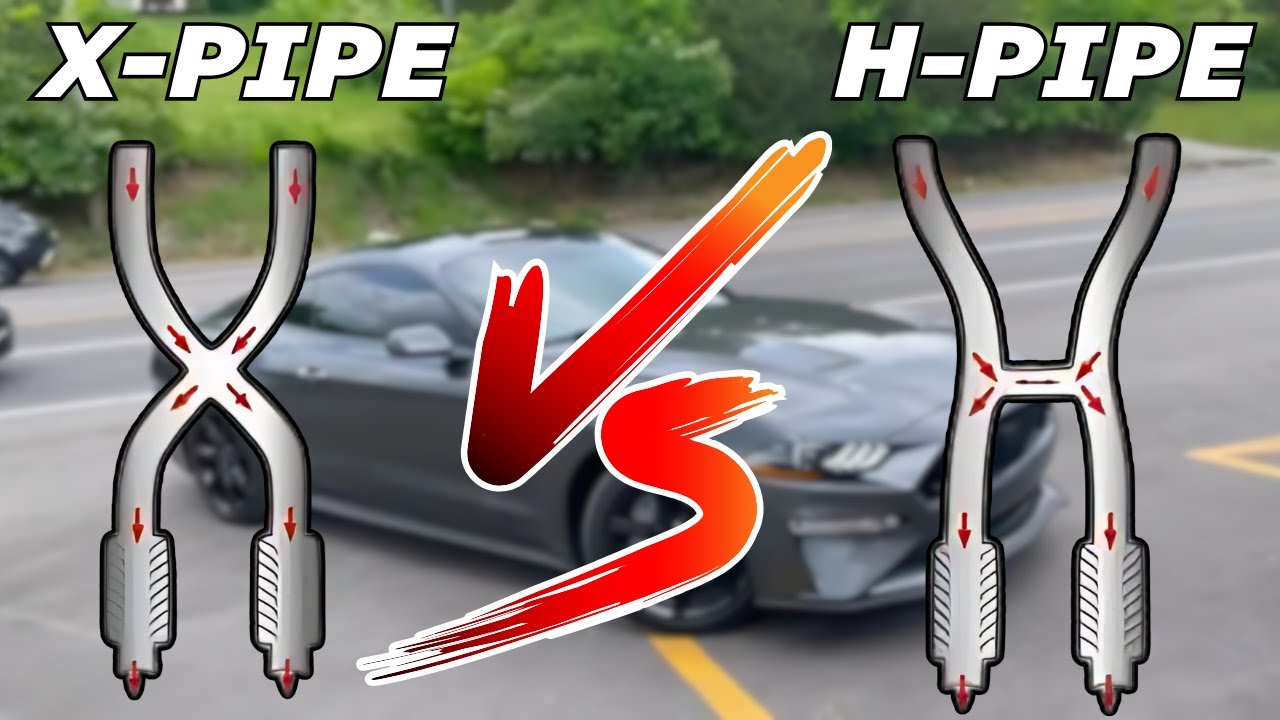
X-pipe: The exhaust streams cross in an "X" pattern, mixing completely.
H-pipe: The exhaust streams connect via a horizontal "H" bridge, mixing partially.
The difference? It's all about how the exhaust gases mix — and that changes everything.
❌ X-Pipe: The High-Rev Scream
How It Works
An X-pipe creates a true crossover where exhaust gases from both banks completely mix in the center.
The design:
- Two pipes converge at an angle
- Gases collide and mix thoroughly
- Single unified stream continues
- Maximum blending of exhaust pulses
This creates turbulent mixing that changes the exhaust note fundamentally.
Sound Characteristics
X-pipe sound profile:
- Higher-pitched — More "exotic" or "European" tone
- Smoother — Less choppy, more refined
- Louder at high RPM — Screams when you rev
- Less rumble — Quieter at idle, louder at WOT
- More "raspy" — Sharp, aggressive tone
Think: Ferrari, Lamborghini, modern Corvettes. That high-pitched, exotic scream? That's X-pipe territory.
Performance Benefits
X-pipe advantages:
- Better high-RPM flow — Superior at high engine speeds
- More horsepower — Typically 5-15 HP gain (depending on setup)
- Improved scavenging — Better exhaust pulse timing
- Reduced backpressure — More efficient flow
- Better for forced induction — Works well with turbos/superchargers
The turbulent mixing creates a scavenging effect that helps pull exhaust out of the cylinders faster.
When to Choose X-Pipe
X-pipe is best for:
- High-revving engines — Engines that live above 4,000 RPM
- Forced induction builds — Turbo or supercharged applications
- Track-focused cars — Maximum high-RPM performance
- Modern muscle — Corvettes, modern Mustangs, Camaros
- Exotic sound preference — Want that European supercar tone
If you want maximum performance and don't mind sacrificing some low-end rumble, X-pipe is your choice.
⚡ H-Pipe: The Deep Muscle Rumble
How It Works
An H-pipe creates a horizontal bridge between the two exhaust banks. The gases partially mix through the connecting pipe.
The design:
- Two parallel pipes run side-by-side
- Horizontal bridge connects them
- Gases can flow between banks
- Less complete mixing than X-pipe
This creates less turbulent mixing but maintains more exhaust pulse separation.
Sound Characteristics
H-pipe sound profile:
- Deeper tone — Classic muscle car rumble
- More "choppy" — Distinct exhaust pulses
- Louder at idle — More presence at low RPM
- Less high-pitched — Doesn't scream as much
- More "throaty" — Deep, aggressive rumble
Think: Classic Mustangs, old-school Camaros, traditional muscle. That deep, rumbling idle? That's H-pipe territory.
Performance Benefits
H-pipe advantages:
- Better low-RPM torque — More power down low
- Improved scavenging at idle — Better cylinder balance
- Less backpressure — Still improves flow significantly
- More predictable — Consistent power delivery
- Better for daily driving — More usable power range
The partial mixing maintains exhaust pulse separation that helps low-RPM performance.
When to Choose H-Pipe
H-pipe is best for:
- Classic muscle cars — Traditional American V8s
- Daily drivers — Cars driven on the street regularly
- Low-RPM builds — Engines that make power down low
- Sound preference — Want that classic muscle rumble
- Budget builds — Often cheaper and easier to install
If you want classic muscle sound and better low-end performance, H-pipe is your choice.
🔬 The Science: Why They Sound Different
Exhaust Pulse Timing
Exhaust pulses are the key to understanding the difference:
V8 firing order creates alternating pulses:
- Left bank fires → exhaust pulse
- Right bank fires → exhaust pulse
- Pattern repeats
X-pipe: Pulses mix completely, creating smoother, higher-frequency sound waves.
H-pipe: Pulses maintain more separation, creating choppier, lower-frequency sound waves.
Acoustic Wave Interference
Sound waves behave differently:
X-pipe:
- Complete mixing creates constructive interference
- Higher frequencies amplify
- Creates that "scream" at high RPM
- Smoother overall tone
H-pipe:
- Partial mixing creates different interference patterns
- Lower frequencies dominate
- Creates that "rumble" at all RPMs
- More distinct pulses
Flow Dynamics
Exhaust flow is also different:
X-pipe:
- Turbulent mixing creates scavenging effect
- Better at high RPM when flow is high
- More efficient at removing exhaust gases
- Creates slight vacuum effect
H-pipe:
- Less turbulent, more laminar flow
- Better at low RPM when flow is lower
- Maintains pressure balance
- More predictable flow patterns
📊 Direct Comparison: X-Pipe vs H-Pipe
Sound Comparison
| Characteristic | X-Pipe | H-Pipe | |---------------|--------|--------| | Idle sound | Quieter, smoother | Louder, choppier | | High RPM | Screams, high-pitched | Throaty, deep | | Overall tone | Exotic, refined | Classic, raw | | Volume | Louder at high RPM | Louder at low RPM | | Character | European supercar | American muscle |
Performance Comparison
| Metric | X-Pipe | H-Pipe | |--------|--------|--------| | High-RPM HP | Better (5-15 HP gain) | Good (3-10 HP gain) | | Low-RPM torque | Good | Better | | Flow efficiency | Superior at high RPM | Superior at low RPM | | Backpressure | Lower | Slightly higher | | Scavenging | Better at high RPM | Better at low RPM |
Cost Comparison
| Factor | X-Pipe | H-Pipe | |--------|--------|--------| | Material cost | Similar | Similar | | Installation | More complex | Simpler | | Labor cost | Higher | Lower | | Custom work | More expensive | Less expensive |
Installation Comparison
| Aspect | X-Pipe | H-Pipe | |--------|--------|--------| | Complexity | More complex | Simpler | | Fitment | Requires more space | More forgiving | | Welding | More precise | Easier | | Clearance | Needs careful routing | More flexible |
🎯 Which One Is Right for Your Build?
For V8 Muscle Cars
Classic muscle (1960s-1990s):
- H-pipe — Matches the era, classic sound
- Better low-end torque
- Traditional rumble
Modern muscle (2000s+):
- X-pipe — Modern performance focus
- Better high-RPM power
- Exotic sound
Daily driver:
- H-pipe — Better low-RPM performance
- More usable power
- Classic sound
Track/race car:
- X-pipe — Maximum high-RPM performance
- Better flow at speed
- More horsepower
For Forced Induction
Turbocharged:
- X-pipe — Better high-RPM flow
- Works with turbo exhaust pulses
- Maximum power potential
Supercharged:
- X-pipe or H-pipe — Depends on setup
- X-pipe for high-RPM builds
- H-pipe for low-RPM builds
For Different Engine Types
V8:
- Both work great
- X-pipe for performance
- H-pipe for sound
V6:
- X-pipe typically better
- Less benefit from H-pipe
- Modern V6s prefer X-pipe
Inline-4:
- Usually no crossover needed
- Single exhaust bank
- Turbo 4-cylinders may benefit
🔧 Installation Considerations
X-Pipe Installation
Challenges:
- Space requirements — Needs room for X intersection
- Precise routing — Must align perfectly
- Welding complexity — More joints to weld
- Clearance issues — May hit driveshaft, transmission
Tips:
- Measure carefully before cutting
- Use quality mandrel-bent pipes
- Professional welding recommended
- Test fit before final welding
H-Pipe Installation
Advantages:
- More forgiving — Easier to fit
- Simpler design — Fewer complex angles
- Better clearance — Less likely to hit components
- DIY-friendly — Easier for home installation
Tips:
- Bridge placement matters (typically 12-18" after headers)
- Size the bridge correctly (usually 2.5-3" diameter)
- Ensure good weld penetration
- Check for leaks after installation
Professional vs DIY
Professional installation:
- X-pipe: Highly recommended
- H-pipe: Recommended for best results
- Ensures proper fitment
- Quality welding
- Warranty coverage
DIY installation:
- X-pipe: Advanced skill required
- H-pipe: Moderate skill possible
- Requires welding equipment
- Precise measurements needed
- Test fit everything first
💰 Cost Analysis
Material Costs
X-pipe:
- Pre-fabricated: $150-400
- Custom fabrication: $300-600
- Quality varies significantly
- Stainless steel recommended
H-pipe:
- Pre-fabricated: $100-300
- Custom fabrication: $200-500
- Generally cheaper
- Mild steel acceptable for some
Installation Costs
X-pipe:
- Professional: $200-500
- More complex = higher labor
- Welding time longer
H-pipe:
- Professional: $150-350
- Simpler = lower labor
- Faster installation
Total Cost Comparison
X-pipe total: $350-900 (materials + installation)
H-pipe total: $250-650 (materials + installation)
Savings with H-pipe: Typically $100-250 less
🎵 Real-World Sound Examples
X-Pipe Sound Profile
At idle:
- Smooth, refined tone
- Less "lumpy" than H-pipe
- Quieter overall
- More European character
At 3,000 RPM:
- Starting to wake up
- Higher pitch developing
- Smoother than H-pipe
- Building intensity
At 6,000 RPM:
- Full scream
- High-pitched, exotic
- Maximum volume
- Racing car character
H-Pipe Sound Profile
At idle:
- Deep, rumbling
- Choppy, distinct pulses
- Classic muscle sound
- More presence
At 3,000 RPM:
- Throaty, aggressive
- Maintaining deep tone
- More "raw" than X-pipe
- Strong character
At 6,000 RPM:
- Still deep, but louder
- Less high-pitched
- More "American" sound
- Powerful but not screaming
🔬 Technical Deep Dive
Exhaust Scavenging Explained
Scavenging is the process of using exhaust pulse energy to help pull fresh air into cylinders.
How it works:
- Exhaust pulse exits cylinder
- Creates low-pressure wave
- Low pressure helps pull next exhaust pulse
- Improves cylinder filling
- Increases power
X-pipe:
- Complete mixing creates stronger scavenging
- Better at high RPM
- More efficient pulse timing
H-pipe:
- Partial mixing maintains pulse separation
- Better at low RPM
- More predictable scavenging
Backpressure Dynamics
Backpressure is resistance to exhaust flow.
Too much backpressure:
- Reduces power
- Increases heat
- Hurts efficiency
Too little backpressure:
- Can hurt low-RPM torque
- May cause tuning issues
- Can be too loud
X-pipe:
- Lower backpressure
- Better high-RPM flow
- May hurt low-RPM slightly
H-pipe:
- Slightly higher backpressure
- Better low-RPM flow
- More balanced overall
Flow Velocity
Flow velocity affects sound and performance.
High velocity:
- Higher-pitched sound
- Better high-RPM performance
- More efficient at speed
Lower velocity:
- Deeper sound
- Better low-RPM performance
- More torque down low
X-pipe: Higher velocity = higher pitch
H-pipe: Lower velocity = deeper tone
🏁 Performance Testing Results
Dyno Results (Typical V8)
X-pipe gains:
- Peak HP: +8-15 HP
- Peak torque: +5-10 lb-ft
- High-RPM (5,000+): +10-15% improvement
- Low-RPM (2,000-3,000): +2-5% improvement
H-pipe gains:
- Peak HP: +5-12 HP
- Peak torque: +8-15 lb-ft
- High-RPM (5,000+): +5-10% improvement
- Low-RPM (2,000-3,000): +8-12% improvement
Key takeaway: X-pipe wins high-RPM, H-pipe wins low-RPM.
Real-World Driving
X-pipe:
- Better on track
- Better at highway speeds
- Better for racing
- Less torque down low
H-pipe:
- Better for daily driving
- Better acceleration from stop
- Better for street use
- More usable power
🎨 Sound Customization
Combining with Mufflers
X-pipe + aggressive mufflers:
- Maximum high-RPM scream
- Very loud
- Exotic sound
- Track-focused
H-pipe + aggressive mufflers:
- Deep, aggressive rumble
- Loud but throaty
- Classic muscle sound
- Street-focused
X-pipe + quiet mufflers:
- Refined, smooth tone
- Still high-pitched
- More civilized
- Daily driver friendly
H-pipe + quiet mufflers:
- Deep but controlled
- Classic sound maintained
- Good for daily use
- Less obnoxious
Header Combinations
Long-tube headers + X-pipe:
- Maximum performance
- Highest pitch
- Best high-RPM flow
- Racing setup
Long-tube headers + H-pipe:
- Great performance
- Deep, aggressive sound
- Better low-RPM
- Street/strip setup
Short-tube headers + X-pipe:
- Good performance
- Higher pitch maintained
- Easier installation
- Budget performance
Short-tube headers + H-pipe:
- Good performance
- Classic sound
- Easiest installation
- Budget muscle
⚠️ Common Mistakes to Avoid
Installation Mistakes
X-pipe:
- Wrong angle of intersection
- Too close to headers
- Poor welding quality
- Insufficient clearance
H-pipe:
- Bridge too small
- Wrong bridge location
- Poor weld penetration
- Not checking for leaks
Sound Expectations
X-pipe:
- Expecting deep rumble (won't happen)
- Thinking it's quieter (it's not)
- Not understanding high-RPM focus
H-pipe:
- Expecting exotic scream (won't happen)
- Thinking it's less powerful (it's not)
- Not understanding low-RPM focus
Performance Expectations
Both:
- Expecting massive HP gains (realistic: 5-15 HP)
- Not tuning after installation
- Ignoring other exhaust components
- Not considering full system
💡 Pro Tips
For Maximum Performance
Choose X-pipe if:
- You track your car
- You want high-RPM power
- You have forced induction
- You want exotic sound
Choose H-pipe if:
- You daily drive
- You want low-RPM torque
- You have naturally aspirated
- You want classic sound
For Best Sound
X-pipe sound tips:
- Pair with aggressive mufflers
- Use long-tube headers
- Consider resonator delete
- Expect high-pitched tone
H-pipe sound tips:
- Pair with chambered mufflers
- Use traditional headers
- Keep resonators for control
- Expect deep rumble
For Installation
X-pipe installation:
- Get professional help
- Measure three times
- Test fit everything
- Quality welding essential
H-pipe installation:
- DIY possible with skills
- Bridge placement critical
- Simpler but still important
- Check for leaks
🏁 The Bottom Line
X-pipe vs H-pipe isn't about which is "better" — it's about what you want.
Choose X-pipe if:
- You want maximum high-RPM performance
- You prefer exotic, high-pitched sound
- You track your car or drive hard
- You have forced induction
Choose H-pipe if:
- You want better low-RPM torque
- You prefer classic muscle rumble
- You daily drive your car
- You want traditional American sound
The reality: Both are excellent choices. Both improve performance. Both sound amazing. The difference is character — and that's personal preference.
The best exhaust system isn't about X-pipe or H-pipe alone. It's about the complete system: headers, crossover, mufflers, tips, and tuning. Get the whole package right, and your car will sound and perform exactly how you want.
So which one? Listen to both. Watch videos. Go to meets. Hear them in person. Then decide based on your ears and your goals.
Because at the end of the day, the best exhaust is the one that makes you smile every time you start the car.
❓ FAQs
What's the difference between X-pipe and H-pipe?
X-pipe creates complete exhaust mixing (higher-pitched, exotic sound, better high-RPM performance). H-pipe creates partial mixing (deeper rumble, better low-RPM torque, classic muscle sound).
Which sounds better: X-pipe or H-pipe?
It's subjective. X-pipe sounds more exotic and high-pitched (like European supercars). H-pipe sounds deeper and more rumbling (like classic American muscle). Choose based on your preference.
Does X-pipe or H-pipe add more horsepower?
X-pipe typically adds slightly more peak horsepower (5-15 HP vs 5-12 HP), especially at high RPM. H-pipe adds more low-RPM torque. The difference is usually 3-5 HP at peak.
Can I install X-pipe or H-pipe myself?
H-pipe is more DIY-friendly due to simpler design. X-pipe requires more precise welding and fitment, so professional installation is recommended. Both require welding skills and equipment.
Which is better for daily driving: X-pipe or H-pipe?
H-pipe is generally better for daily driving because it provides more low-RPM torque and usable power. X-pipe is better for track use or high-RPM performance.
Do I need X-pipe or H-pipe with headers?
Both work with headers, but the combination matters. Long-tube headers + X-pipe = maximum performance. Long-tube headers + H-pipe = great performance with classic sound.
How much does X-pipe vs H-pipe cost?
X-pipe typically costs $350-900 total (materials + installation). H-pipe typically costs $250-650 total. H-pipe is generally $100-250 cheaper due to simpler design.
Will X-pipe or H-pipe make my car louder?
Both will make your car louder, but differently. X-pipe is louder at high RPM (screams). H-pipe is louder at idle and low RPM (rumbles). Overall volume depends on your complete exhaust system.
Can I switch from H-pipe to X-pipe later?
Yes, but it requires cutting and welding. The crossover section can be replaced, but you'll need to ensure proper fitment and welding quality. Consider your choice carefully before installation.
Which is better for turbocharged engines?
X-pipe is generally better for turbocharged engines because it provides superior high-RPM flow and works well with turbo exhaust pulses. However, both can work depending on your specific setup.
The exhaust note is your car's voice. X-pipe makes it scream. H-pipe makes it rumble. Choose the voice that matches your soul — because every rev tells a story.