
⛽ The Power Secret Everyone's Talking About
You've heard the stories. A car makes 500HP on pump gas, then switches to E85 and suddenly hits 650HP. Same car, same mods, just different fuel.
What's the magic? Why does E85 unlock so much power?
It's not magic — it's science. And once you understand it, E85 becomes one of the most powerful (and cost-effective) mods you can make.
Let's break down exactly why E85 adds power, how it works, and what you need to know before making the switch.
🔬 What Is E85? The Basics
The Composition
E85 stands for "85% ethanol, 15% gasoline."
- Ethanol — Alcohol-based fuel derived from corn, sugarcane, or other crops
- Gasoline — Traditional petroleum-based fuel (the 15% remainder)
It's a flex fuel — meaning it can be used in flex-fuel vehicles or modified cars with proper tuning.
The Octane Rating
Here's where it gets interesting:
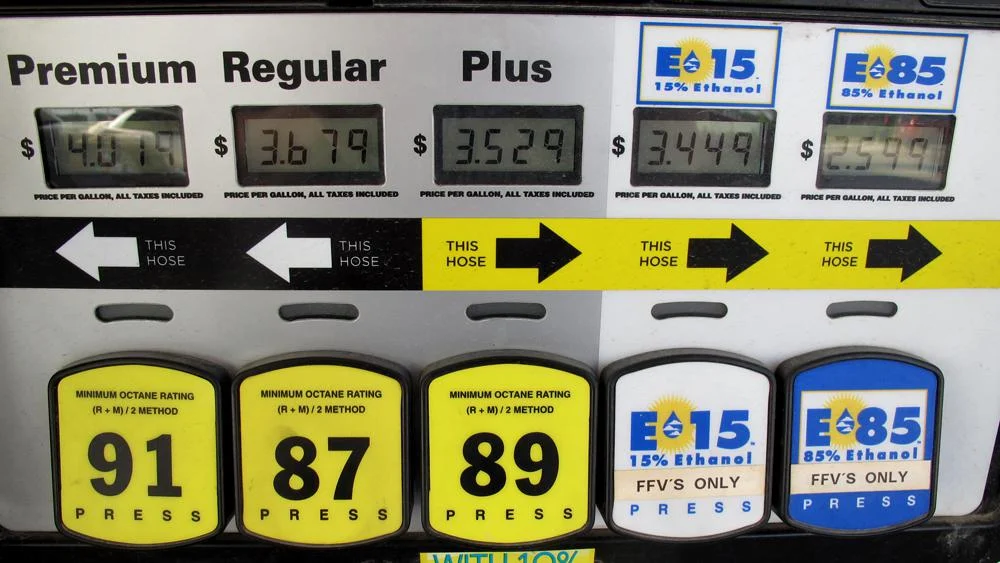
- Regular pump gas: 87-93 octane
- Premium pump gas: 91-94 octane
- E85: 100-105 octane (equivalent)
That higher octane rating is the foundation of E85's power advantage.
⚡ The Science: Why E85 Adds Power
1. Higher Octane = More Boost
Octane rating measures a fuel's resistance to knock (premature detonation).
When you run higher boost pressure (turbo or supercharger), you need higher octane to prevent knock. Knock is dangerous — it can destroy engines.
E85's high octane (100-105) allows you to:
- Run more boost safely
- Run more aggressive timing (spark advance)
- Push the engine harder without detonation
More boost + more timing = more power.
It's that simple.
2. The Cooling Effect
Ethanol has a massive cooling effect when it vaporizes.
Here's the science:
- Latent heat of vaporization — Ethanol absorbs heat as it turns from liquid to vapor
- Lower intake temperatures — Cooler air = denser air = more oxygen = more power
- Reduced knock risk — Cooler temperatures prevent detonation
When E85 vaporizes in your intake manifold, it cools the air charge. This is especially powerful in turbocharged engines where intake temperatures can get dangerously high.
Cooler air = more power.
3. Oxygen Content
Ethanol contains oxygen in its molecular structure.
- Gasoline: No oxygen (just carbon and hydrogen)
- Ethanol: Contains oxygen (C₂H₅OH)
This means:
- More complete combustion — Oxygen helps burn fuel more efficiently
- Leaner mixtures possible — You can run more air relative to fuel
- Better power extraction — More of the fuel's energy gets converted to power
More oxygen = better combustion = more power.
4. Higher Compression Tolerance
E85's high octane allows engines to run higher compression ratios.
Higher compression means:
- More efficient combustion — Better energy extraction
- More power per cycle — Each combustion event produces more force
- Better thermal efficiency — Less energy wasted as heat
Higher compression = more power.
🚗 Real-World Power Gains
Turbocharged Engines
Turbo cars see the biggest gains from E85:
- More boost — Can safely run 5-10+ PSI more boost
- More timing — Can advance spark timing significantly
- Cooler intake temps — Cooling effect prevents heat soak
- Power gains: 30-50% horsepower increases are common
Example: A 500HP turbo car on pump gas can easily hit 650-750HP on E85 with proper tuning.
Supercharged Engines
Supercharged cars also benefit significantly:
- More boost — Can push the blower harder
- More timing — Can run aggressive timing curves
- Cooling effect — Helps manage heat from the blower
- Power gains: 20-40% horsepower increases typical
Example: A 400HP supercharged car can hit 500-550HP on E85.
Naturally Aspirated Engines
NA engines see smaller but still meaningful gains:
- Higher compression — Can run more compression
- More timing — Can advance timing further
- Better combustion — Oxygen content helps
- Power gains: 10-20% horsepower increases typical
Example: A 300HP NA car might hit 330-360HP on E85.
🔧 The Tuning Factor: Why Proper Tuning Is Critical
You Can't Just Pour It In
E85 requires proper tuning — you can't just fill up and go.
Here's why:
1. Different Stoichiometric Ratio
- Gasoline: 14.7:1 air-to-fuel ratio (stoichiometric)
- E85: 12.5:1 air-to-fuel ratio (stoichiometric)
E85 needs more fuel for the same amount of air. Your fuel system needs to deliver 30-40% more fuel to maintain proper air-fuel ratios.
2. Different Ignition Timing
E85 can handle more aggressive timing than gasoline. Your ECU needs to be tuned to take advantage of this.
3. Different Boost Limits
E85 allows more boost safely. Your boost controller and ECU need to be configured for higher boost levels.
What Happens Without Proper Tuning
If you run E85 without tuning:
- Lean conditions — Not enough fuel = engine damage
- Missed power — Can't take advantage of E85's benefits
- Poor drivability — Rough idle, hesitation, poor throttle response
- Potential damage — Running lean can destroy engines
Proper tuning is non-negotiable.
💰 The Cost Analysis
Fuel Cost
E85 is typically cheaper than premium gasoline:
- Premium gas: $4-5 per gallon
- E85: $2.50-3.50 per gallon
But there's a catch:
E85 has lower energy density — you get 25-30% fewer miles per gallon.
So while E85 costs less per gallon, you'll burn more gallons to go the same distance.
Power Per Dollar
For performance, E85 is incredibly cost-effective:
- Cost per HP gained: Often $50-200 per horsepower
- Compared to other mods: Much cheaper than turbo upgrades, engine builds, etc.
- Best bang for buck: One of the most cost-effective power mods available
Example: Spending $500 on E85 tuning and fuel system upgrades might gain you 100-150HP. That's $3-5 per horsepower — incredibly cheap.
Total Cost of Ownership
Factor in:
- Fuel system upgrades — Larger injectors, fuel pump, lines ($500-2000)
- Tuning costs — Dyno tuning, ECU modifications ($500-1500)
- Ongoing fuel costs — More frequent fill-ups
- Flex fuel sensor — Optional but recommended ($200-400)
Total investment: $1,200-3,900 typically, but the power gains are massive.
⚠️ The Downsides: What You Need to Know
Fuel Economy
E85 reduces fuel economy by 25-30%:
- You'll fill up more often
- Long trips require more planning
- Daily driving costs increase
- Range decreases significantly
If fuel economy matters, E85 isn't ideal.
Availability
E85 isn't available everywhere:
- More common in Midwest (corn country)
- Less common on coasts
- Requires planning for road trips
- May need to carry fuel or map stations
Check availability in your area before committing.
Fuel System Requirements
E85 is corrosive and requires:
- Compatible fuel lines — E85-safe materials
- Larger injectors — Need 30-40% more flow capacity
- Upgraded fuel pump — Need more flow volume
- Proper seals — E85 can degrade some materials
Older cars may need significant fuel system upgrades.
Cold Start Issues
E85 can be difficult to start in cold weather:
- Ethanol doesn't vaporize well when cold
- May need gasoline blend in winter
- Some cars require flex fuel sensors
- Cold start tuning adjustments needed
Winter driving can be challenging.
Maintenance Considerations
E85 can affect:
- Oil life — May need more frequent changes
- Fuel filter — May need more frequent replacement
- Spark plugs — May need different heat range
- Oxygen sensors — May need more frequent replacement
Maintenance costs may increase slightly.
🎯 Who Should Use E85?
Best Candidates
E85 is ideal for:
- Turbocharged cars — Biggest power gains
- Supercharged cars — Significant benefits
- High-compression NA builds — Can take advantage
- Track/race cars — Performance-focused builds
- Modified engines — Already have supporting mods
Not Ideal For
E85 may not be worth it for:
- Stock daily drivers — Fuel economy hit too significant
- Areas without E85 — Availability issues
- Budget builds — Fuel system upgrades expensive
- Older cars — May need extensive modifications
- Fuel economy priority — 25-30% reduction is significant
🔬 The Technical Deep Dive
Octane Rating Explained
Octane rating measures knock resistance:
- Low octane — Knocks easily under pressure
- High octane — Resists knock, allows more boost/timing
E85's 100-105 octane is significantly higher than pump gas (87-93), allowing much more aggressive tuning.
Latent Heat of Vaporization
Ethanol's cooling effect comes from latent heat:
- Gasoline: ~140 BTU/lb latent heat
- Ethanol: ~396 BTU/lb latent heat
Ethanol absorbs almost 3x more heat when vaporizing, creating significant intake cooling.
Stoichiometric Ratio
Air-fuel ratios for complete combustion:
- Gasoline: 14.7:1 (14.7 parts air to 1 part fuel)
- E85: 12.5:1 (12.5 parts air to 1 part fuel)
E85 needs more fuel for the same air, requiring larger injectors and fuel pumps.
Energy Density
Energy content per gallon:
- Gasoline: ~114,000 BTU/gallon
- E85: ~81,800 BTU/gallon
E85 has 28% less energy per gallon, explaining the fuel economy reduction.
🛠️ The Conversion Process
Step 1: Fuel System Assessment
Check your current setup:
- Injector size — Need 30-40% more flow
- Fuel pump capacity — Need more volume
- Fuel lines — Must be E85-compatible
- Fuel filter — May need upgrade
Step 2: Fuel System Upgrades
Common upgrades needed:
- Larger injectors — 30-40% more flow capacity
- Upgraded fuel pump — Higher flow rate
- E85-compatible lines — If needed
- Flex fuel sensor — Optional but recommended
Step 3: ECU Tuning
Proper tuning is essential:
- Air-fuel ratio adjustments — Leaner target ratios
- Timing advance — More aggressive curves
- Boost limits — Higher boost targets
- Cold start calibration — Winter considerations
Step 4: Testing and Validation
Dyno testing recommended:
- Baseline runs — Establish pump gas power
- E85 tuning — Optimize for E85
- Power verification — Confirm gains
- Safety checks — Ensure no knock, proper AFRs
📊 Power Gain Examples
Turbocharged Examples
Subaru WRX STI:
- Pump gas: 350HP
- E85: 450-500HP
- Gain: 100-150HP
Mitsubishi Evo:
- Pump gas: 400HP
- E85: 550-600HP
- Gain: 150-200HP
BMW 335i:
- Pump gas: 400HP
- E85: 550-650HP
- Gain: 150-250HP
Supercharged Examples
Mustang GT (supercharged):
- Pump gas: 600HP
- E85: 750-850HP
- Gain: 150-250HP
Corvette Z06 (supercharged):
- Pump gas: 650HP
- E85: 800-900HP
- Gain: 150-250HP
🎯 The Bottom Line: Why E85 Adds Power
E85 adds power through four main mechanisms:
- Higher octane — Allows more boost and timing
- Cooling effect — Lowers intake temperatures
- Oxygen content — Improves combustion efficiency
- Higher compression tolerance — More efficient power extraction
The result: 20-50% power gains are typical, with turbocharged engines seeing the biggest benefits.
But it's not free power:
- Requires proper tuning
- Needs fuel system upgrades
- Reduces fuel economy significantly
- Requires E85 availability
- May need maintenance adjustments
For performance-focused builds, E85 is one of the best power mods available — offering massive gains at relatively low cost.
For daily drivers prioritizing economy, E85 may not be worth it.
💡 Pro Tips for E85 Success
1. Start with proper fuel system:
- Don't skimp on injectors or fuel pump
- Ensure E85 compatibility
- Size everything for 30-40% more flow
2. Get professional tuning:
- E85 requires proper calibration
- Don't try to tune it yourself
- Dyno tuning is recommended
3. Monitor your setup:
- Watch air-fuel ratios
- Check for knock
- Monitor fuel pressure
- Track fuel economy
4. Plan for availability:
- Map E85 stations
- Consider flex fuel sensor
- Have backup plan for trips
- Consider carrying fuel
5. Maintain properly:
- More frequent oil changes
- Monitor fuel filters
- Check spark plugs
- Watch oxygen sensors
❓ FAQs
How much power does E85 add?
E85 typically adds 20-50% horsepower, with turbocharged engines seeing the biggest gains (30-50%). Supercharged engines see 20-40% gains, while naturally aspirated engines see 10-20% gains.
Why does E85 add more power than gasoline?
E85 adds power through higher octane (allows more boost/timing), cooling effect (lowers intake temps), oxygen content (better combustion), and higher compression tolerance (more efficient power extraction).
Do I need to tune for E85?
Yes, E85 requires proper tuning. It needs different air-fuel ratios (12.5:1 vs 14.7:1), more aggressive timing, and higher boost limits. Running E85 without tuning can cause engine damage.
What fuel system upgrades do I need for E85?
You typically need larger injectors (30-40% more flow), upgraded fuel pump (more volume), E85-compatible fuel lines, and optionally a flex fuel sensor. Total cost is usually $500-2000.
Does E85 reduce fuel economy?
Yes, E85 reduces fuel economy by 25-30% due to lower energy density. You'll get fewer miles per gallon and need to fill up more frequently.
Is E85 available everywhere?
No, E85 availability varies by region. It's more common in the Midwest (corn country) and less common on the coasts. Check availability in your area before committing to E85.
Can I run E85 in any car?
No, E85 requires proper fuel system compatibility and tuning. Older cars may need extensive modifications. Flex-fuel vehicles can run E85 stock, but modified cars need upgrades and tuning.
Is E85 worth it for daily driving?
It depends on priorities. If you want maximum performance, E85 is excellent. If fuel economy is important, the 25-30% reduction may not be worth it. Track/race cars benefit most.
How much does E85 conversion cost?
Total conversion typically costs $1,200-3,900 including fuel system upgrades ($500-2000), tuning ($500-1500), and optional flex fuel sensor ($200-400). Power gains are usually 100-200HP, making it very cost-effective per horsepower.
Does E85 damage engines?
E85 itself doesn't damage engines when properly tuned. However, running E85 without proper tuning (lean conditions) or incompatible fuel systems can cause damage. Proper setup is essential.
E85 isn't magic — it's science. And when you understand the science, you unlock one of the most powerful and cost-effective performance mods available. Because sometimes, the best mod isn't a part. It's fuel.