
🔨 The Permanent Decision
You've seen them on Instagram. You've watched the build videos. You've dreamed about that aggressive, track-ready look.
Widebody kits.
They transform ordinary cars into aggressive, race-inspired machines. But there's one thing that stops most people: you have to cut your car.
Not just trim. Not just modify. Cut. With saws, grinders, and tools that make the modification permanent.
But why? Why can't widebody kits just bolt on? Why does every serious widebody installation require cutting into the body panels?
The answer isn't simple. It's a combination of physics, engineering, aesthetics, and the brutal reality of making wide wheels fit narrow bodies.
Let's break down why cutting is necessary — and what you need to know before you commit.
🎯 What Are Widebody Kits?
The Basic Concept
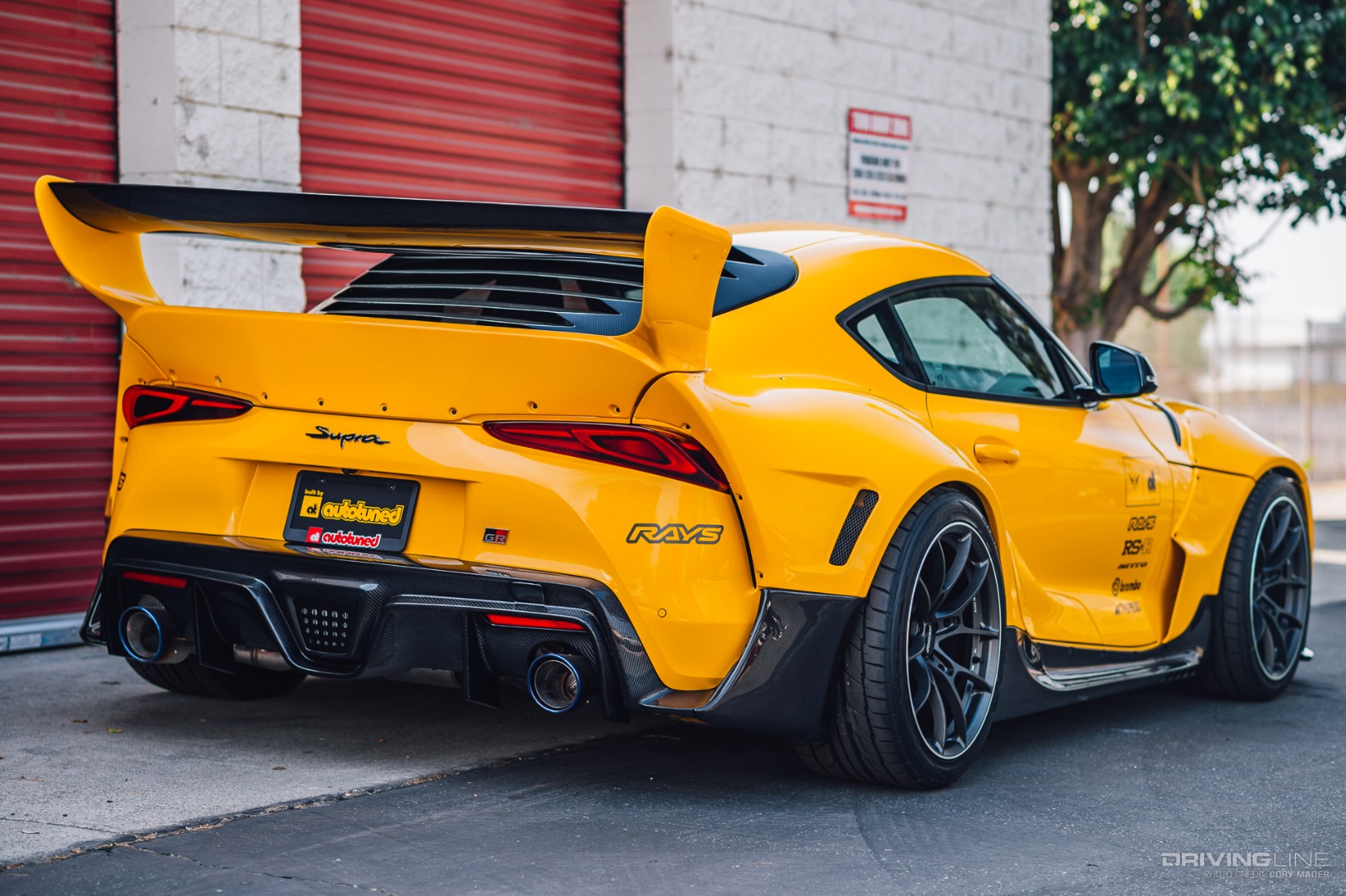
Widebody kits are aftermarket body modifications that widen a car's track width and wheel arches to accommodate:
- Wider wheels (often 2-6 inches wider per side)
- Larger tires (for grip and performance)
- Aggressive stance (lower, wider, more planted)
- Aerodynamic components (flares, canards, diffusers)
They typically include:
- Fender flares (extended wheel arches)
- Side skirts (wider lower body panels)
- Front bumpers (wider, more aggressive)
- Rear bumpers (extended, integrated diffusers)
- Sometimes — roof extensions, door panels, quarter panels
The Visual Impact
Widebody kits create that "stanced" look:
- Wheels sit flush with bodywork
- Aggressive, race-inspired aesthetics
- More presence and visual impact
- Track-ready appearance
But achieving this look requires permanent modification.
✂️ Why Cutting Is Necessary: The Core Reasons
Reason 1: Wheel Clearance
The fundamental problem: Stock fenders are designed for stock wheel widths.
When you install wider wheels (common in widebody builds):
- Wheels extend beyond the original fender line
- Tires rub against inner fender wells
- Suspension travel causes contact
- Turning radius creates interference
Cutting solves this by:
- Removing the original fender edge
- Creating clearance for wider wheels
- Allowing full suspension travel
- Enabling proper turning radius
Without cutting, wider wheels physically cannot fit under the car.
Reason 2: Fender Flare Attachment
Widebody flares need to attach to something solid.
Most flares attach via:
- Bolts through the fender (requires holes)
- Rivets for permanent attachment
- Adhesive (less common, less secure)
- Welding (professional installations)
Cutting creates:
- Clean edges for flare attachment
- Proper mounting surfaces
- Structural integrity for bolts/rivets
- Professional finish
Without cutting, flares either:
- Don't fit properly
- Look awkward and unfinished
- Attach poorly and come loose
- Create gaps and fitment issues
Reason 3: Structural Integrity
Cutting isn't just about clearance — it's about proper structure.
When you cut fenders:
- You remove weak, thin metal
- You create clean edges
- You prepare surfaces for reinforcement
- You enable proper flare integration
Professional installations often include:
- Reinforcement plates
- Welded seams
- Structural bracing
- Proper edge finishing
This creates a stronger, more integrated final product than simply bolting flares over stock fenders.
Reason 4: Aesthetic Requirements
Widebody kits are designed to look integrated, not tacked on.
Proper installation requires:
- Seamless transitions between flares and body
- Proper gaps and panel alignment
- Clean lines and professional finish
- Integrated appearance (looks factory, not aftermarket)
Cutting enables:
- Flares to sit flush with body
- Proper panel gaps
- Clean, professional lines
- Factory-quality appearance
Without cutting, widebody kits look obviously aftermarket and unfinished.
🔧 The Physics: Why You Can't Just "Make It Fit"
The Geometry Problem
Car bodies are designed with specific dimensions:
- Track width (distance between wheels)
- Wheelbase (distance between axles)
- Body width (narrower than track width)
- Fender clearance (minimal for aerodynamics)
When you add wider wheels:
- Track width increases (wheels stick out)
- Body width stays the same (fenders don't move)
- Clearance disappears (wheels hit fenders)
- Geometry conflicts (can't fit without modification)
You can't change physics — wider wheels need wider clearance.
The Suspension Problem
Suspension travel requires clearance:
- Compression (bumps, braking) moves wheels up
- Rebound (acceleration, cornering) moves wheels out
- Turning moves wheels in arcs
- All movements need clearance
Without cutting:
- Wheels hit fenders during compression
- Tires rub during turning
- Suspension travel is limited
- Performance is compromised
Cutting creates the clearance needed for proper suspension function.
The Tire Problem
Wider tires need space:
- Width (obviously)
- Height (during compression)
- Sidewall flex (during cornering)
- Heat expansion (during driving)
Stock fenders don't account for:
- Tire width increases
- Sidewall bulge
- Heat expansion
- Performance tire characteristics
Cutting accommodates all tire requirements.
🎨 Types of Widebody Kits: Cutting Requirements
Bolt-On Widebody Kits
Bolt-on kits still require cutting:
- Less cutting than full widebody
- Fender trimming for clearance
- Hole drilling for attachment
- Edge finishing for appearance
Cutting required:
- Trim fender edges
- Create mounting holes
- Prepare attachment surfaces
- Finish edges properly
Even "bolt-on" requires cutting — just less of it.
Full Widebody Kits
Full widebody kits require extensive cutting:
- Complete fender removal or major modification
- Quarter panel cutting (rear)
- Door panel modification (sometimes)
- Structural reinforcement (often)
Cutting required:
- Remove entire fender sections
- Cut quarter panels
- Modify door panels
- Prepare for welding/reinforcement
These are permanent modifications.
Overfender Kits
Overfender kits (like Rocket Bunny, Liberty Walk):
- Bolt over existing fenders
- Still require cutting for clearance
- Less invasive than full widebody
- More reversible (sort of)
Cutting required:
- Trim fender edges
- Create clearance for wheels
- Prepare mounting surfaces
- Finish cut edges
Even overfenders need cutting.
Custom Widebody
Custom widebody (one-off builds):
- Maximum cutting required
- Complete body modification
- Structural changes often
- Professional fabrication
Cutting required:
- Extensive body modification
- Structural reinforcement
- Custom fabrication
- Professional welding
These are the most invasive modifications.
⚙️ The Installation Process: What Actually Gets Cut
Front Fender Cutting
Front fenders typically require:
- Edge trimming (remove outer edge)
- Inner fender modification (clearance for wheels)
- Mounting hole creation (for flares)
- Edge finishing (smooth, professional)
Tools needed:
- Angle grinder with cutting wheel
- Dremel for detail work
- Files for finishing
- Measuring tools for precision
Rear Quarter Panel Cutting
Rear quarters are more complex:
- Larger cutting area (more material)
- Structural considerations (safety)
- Welding often required (professional)
- More permanent modification
Tools needed:
- Plasma cutter (professional)
- Angle grinder
- Welding equipment
- Bodywork tools
Inner Fender Well Modification
Inner fenders often need:
- Clearance modification (wheel travel)
- Reinforcement (structural)
- Sealing (water, debris)
- Professional finishing
This is often overlooked but critical.
⚠️ Safety Considerations: Why Professional Installation Matters
Structural Integrity
Cutting body panels affects:
- Crash safety (structural integrity)
- Rigidity (body stiffness)
- Weight distribution (if significant)
- Resale value (permanent modification)
Professional installation ensures:
- Proper reinforcement
- Structural integrity maintained
- Safety standards met
- Quality workmanship
Water and Debris Protection
Cutting creates openings that need:
- Sealing (waterproofing)
- Protection (debris, rust)
- Proper finishing (longevity)
- Maintenance (ongoing care)
Improper cutting leads to:
- Water intrusion
- Rust formation
- Debris accumulation
- Premature failure
Electrical and Mechanical Systems
Cutting near:
- Wiring harnesses (electrical)
- Brake lines (safety)
- Fuel lines (safety)
- Cooling systems (performance)
Professional installers know:
- Where to cut safely
- What to avoid
- How to protect systems
- When to relocate components
💰 Cost Implications: Why Cutting Affects Price
Installation Complexity
Cutting requires:
- Skilled labor (bodywork expertise)
- Time (hours of work)
- Tools (specialized equipment)
- Materials (reinforcement, finishing)
Professional installation costs:
- $2,000 - $10,000+ for full widebody
- $500 - $2,000 for bolt-on
- $1,000 - $5,000 for custom work
- Varies by car and complexity
Reversibility
Cutting is permanent:
- Can't be undone easily
- Reduces resale value (for most buyers)
- Requires replacement to reverse
- Limits future modifications
This affects:
- Car value
- Insurance
- Warranty
- Future options
Maintenance
Cut fenders require:
- Ongoing maintenance (rust prevention)
- Periodic inspection (structural)
- Potential repairs (damage)
- Professional care (finishing)
Long-term costs add up.
🛠️ Professional vs. DIY: The Cutting Reality
Professional Installation
Pros:
- Proper cutting (precision, safety)
- Structural reinforcement (safety)
- Professional finish (quality)
- Warranty (peace of mind)
- Experience (knows what to avoid)
Cons:
- Expensive ($2,000 - $10,000+)
- Time (weeks, sometimes months)
- Location (need to find shop)
- Less control (you're not doing it)
DIY Installation
Pros:
- Cost savings (labor costs)
- Learning experience (skills gained)
- Control (you decide everything)
- Satisfaction (you did it yourself)
Cons:
- Risk (mistakes are permanent)
- Time (learning curve)
- Tools (need to buy/rent)
- Quality (harder to achieve)
- Safety (structural concerns)
Reality: Most DIY widebody cuts look obviously DIY. Professional work is worth the cost.
🚫 Alternatives to Cutting: Do They Exist?
Flare Extensions (Minimal Cutting)
Some kits require minimal cutting:
- Small trim only
- Less invasive
- More reversible
- Limited width increase
Trade-off: Less aggressive look, limited wheel width.
Wheel Spacers (No Cutting)
Wheel spacers push wheels out:
- No cutting required
- Limited width increase (1-2 inches)
- Less aggressive look
- Potential safety concerns
Trade-off: Not a true widebody, limited effect.
Camber Adjustment (No Cutting)
Extreme camber tucks wheels:
- No cutting required
- Wheels fit under stock fenders
- Compromises performance
- Tire wear issues
Trade-off: Performance sacrifice, not true widebody.
The Reality
True widebody requires cutting. There's no way around it. Alternatives are compromises, not solutions.
🎯 Common Mistakes: What Goes Wrong
Cutting Too Much
Over-cutting causes:
- Structural weakness
- Fitment issues
- Finishing problems
- Safety concerns
Solution: Measure twice, cut once. Professional guidance helps.
Cutting Too Little
Under-cutting causes:
- Wheel clearance issues
- Rubbing problems
- Fitment gaps
- Unfinished appearance
Solution: Better to cut more carefully than too little.
Improper Edge Finishing
Rough edges cause:
- Rust formation
- Paint problems
- Unprofessional appearance
- Safety hazards
Solution: Proper finishing is critical.
Missing Reinforcement
No reinforcement causes:
- Structural weakness
- Flex and movement
- Failure over time
- Safety concerns
Solution: Professional installation includes reinforcement.
📐 The Technical Details: How Cutting Works
Measurement and Planning
Before cutting:
- Measure wheel width (exact)
- Calculate clearance needed (suspension travel)
- Plan cut lines (precise)
- Mark everything (accuracy)
Precision matters — mistakes are permanent.
Cutting Tools
Common tools:
- Angle grinder (primary cutting)
- Plasma cutter (professional, clean)
- Dremel (detail work)
- Jigsaw (curved cuts)
- Files (finishing)
Tool quality affects cut quality.
Cutting Techniques
Proper technique:
- Slow, steady cuts (control)
- Multiple passes (depth)
- Cooling (prevent warping)
- Support (prevent flex)
Rushing creates problems.
Finishing
After cutting:
- Deburr edges (smooth)
- File smooth (finish)
- Prime (rust prevention)
- Paint (protection)
Finishing determines longevity.
🏁 Real-World Examples: Famous Widebody Builds
Rocket Bunny / Pandem
Rocket Bunny kits:
- Overfender design (bolts over)
- Still requires cutting (clearance)
- Iconic look (recognizable)
- Popular choice (many cars)
Cutting: Moderate (fender trimming, clearance).
Liberty Walk
Liberty Walk kits:
- Aggressive styling (extreme)
- Extensive cutting (full widebody)
- Professional installation (required)
- High-end builds (expensive)
Cutting: Extensive (full fender modification).
Custom Fabrication
One-off builds:
- Maximum cutting (complete)
- Structural changes (often)
- Professional fabrication (required)
- Unique results (one-of-a-kind)
Cutting: Maximum (everything modified).
💡 Pro Tips: Making the Cut Right
1. Plan Everything
Before cutting:
- Research your specific car
- Understand the kit requirements
- Plan the entire process
- Have backup plans
Planning prevents problems.
2. Start Small
For DIY:
- Practice on scrap metal
- Start with less critical areas
- Learn techniques first
- Build confidence gradually
Experience matters.
3. Use Quality Tools
Invest in:
- Good angle grinder
- Quality cutting wheels
- Proper safety equipment
- Professional-grade tools
Tool quality affects results.
4. Take Your Time
Rushing causes:
- Mistakes
- Uneven cuts
- Safety issues
- Poor finish
Patience creates quality.
5. Professional Help
When in doubt:
- Consult professionals
- Get quotes
- Ask questions
- Consider hiring help
Expertise is worth it.
🚗 The Spota Connection: Documenting Your Build
Building Your Widebody Story
Spota helps you:
- Document the process (before, during, after)
- Share your build (community engagement)
- Track progress (timeline)
- Connect with builders (advice, inspiration)
Your widebody build becomes part of your car's story.
Finding Inspiration
Use Spota to:
- Discover widebody builds (inspiration)
- Connect with builders (advice)
- Share your process (community)
- Get feedback (improvement)
Community helps you build better.
🏁 The Bottom Line
Widebody kits require cutting because:
- Physics — Wider wheels need wider clearance
- Structure — Proper installation requires modification
- Aesthetics — Professional finish needs cutting
- Function — Performance requires clearance
There's no way around it. True widebody is a permanent modification that requires cutting into your car's body panels.
But when done right:
- Looks incredible (aggressive, professional)
- Performs better (wider track, more grip)
- Builds value (in car culture)
- Creates identity (unique, personalized)
The decision to cut is permanent. But for many enthusiasts, the result is worth it.
Because a properly executed widebody doesn't just modify your car — it transforms it.
❓ FAQs
Why do widebody kits require cutting?
Widebody kits require cutting because wider wheels need clearance that stock fenders don't provide. Cutting removes fender material to create space for wider wheels and allows proper flare attachment.
Can you install a widebody kit without cutting?
No. True widebody kits require cutting for wheel clearance and proper flare attachment. Alternatives like wheel spacers or extreme camber are compromises, not true widebody solutions.
How much cutting is required for a widebody kit?
It depends on the kit. Bolt-on kits require minimal cutting (fender trimming). Full widebody kits require extensive cutting (complete fender modification). Overfender kits require moderate cutting (clearance and mounting).
Is cutting your car for a widebody kit safe?
When done professionally with proper reinforcement, cutting is safe. DIY cutting can compromise structural integrity. Professional installation ensures safety standards are met.
Can you reverse a widebody kit installation?
Not easily. Cutting is permanent. Reversing requires replacing cut body panels, which is expensive and time-consuming. Consider widebody a permanent modification.
How much does professional widebody installation cost?
Professional installation costs $2,000 - $10,000+ depending on the car and kit complexity. Full custom widebody can cost $10,000 - $30,000+. Bolt-on kits cost $500 - $2,000.
What tools are needed to cut fenders for a widebody kit?
Common tools include angle grinder with cutting wheels, Dremel for detail work, files for finishing, measuring tools, and safety equipment. Professional installations may use plasma cutters and welding equipment.
Do all widebody kits require the same amount of cutting?
No. Bolt-on kits require less cutting. Full widebody kits require extensive cutting. Overfender kits require moderate cutting. Custom fabrication requires maximum cutting.
Will cutting my car for a widebody kit affect resale value?
Yes, typically negatively. Most buyers prefer unmodified cars. However, in car culture, well-executed widebody builds can increase value to the right buyer. It's a niche market.
How do I find a professional to install a widebody kit?
Research body shops that specialize in custom work, ask car communities for recommendations, check portfolios, get multiple quotes, and verify insurance and warranties. Use Spota to connect with builders in your area.
Cutting your car is permanent. But for those who commit, the result is transformation. Because widebody isn't just about width — it's about making a statement, building something unique, and creating a car that's truly yours.